
Neuropsychological Testing
What is a Neuropsychological Test?
Neuropsychological tests are a series of tasks that assess performance and function linked to specific pathways or areas of the brain. They are able to identify specific brain related problems such as neurodegenerative conditions, stress-related conditions, learning disorders (ex: dyslexia, dysgraphia, ADHD), and thinking or memory disturbances related to an injury or illness such as a traumatic brain injury or stroke.
Neuropsychological testing during your time with the providers and staff at the Bluff Plantation will guide all forms of your treatment now and into the future, as assessment through neuropsychological testing at regular intervals can also determine how and whether the brain itself is recovering appropriately.
Neuropsychological testing truly allows you and your team to discover and harness your brain’s ability to heal efficiently in order to help you achieve your goals.
The brain after substance abuse
When individuals use illicit substances for an extended period of time, the very structure and function of the brain can become impaired, creating obstacles to making important life decisions that you or your loved one may not have experienced before.
Neuropsychological testing will allow answers to questions you may not have considered important to your recovery, from the perspective of understanding the disease of addiction as one of a disruption in how your brain processes important information and makes decisions.
NeuroBehavioral Associates is contracted through Bluff Plantation to help the clinical team assess, diagnose, and offer treatment suggestions. We are an independent medical group located in Augusta, GA and have been working with Bluff Plantation for the past three years. A neuropsychological evaluation will help to uncover weaknesses in brain function that can be focused on and better supported, and also strengths that can be capitalized on when helping sustain the path to recovery. Vour clinical team will have a better understanding of what types of therapies to use in order to allow the brain to heal faster and stronger, whether through medication management or psychotherapies (ex: ACT, CBT, DBT, Ml, etc).
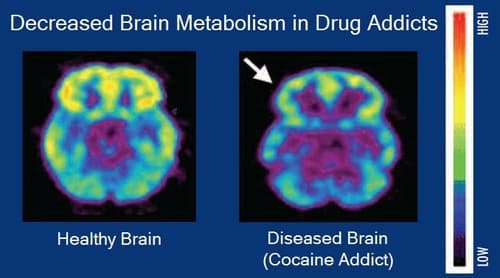
Healthy brain compared to drug addict brain - Wikipedia
A neuropsychological evaluation involves detailed analyses of the following for diagnostic clarity and treatment planning:
- Executive Function - your brain’s ability to plan, problem solve, concentrate and pay attention, and control emotions and impulses
- Intelligence and Language Function - including processing of speech, reading, and writing
- Memory and Learning - not simply a test of what you know, but your ability to gather information, process information, organize it, and ultimately access and retrieve it, so that you can use it in making decisions.
- Visual, Spatial, and Motor Functions - a dynamic assessment of how your brain processes sensory information. We all learn differently, whether visually, verbally, through movement, and testing can help to discover strengths and weaknesses in these areas.
- Emotional & Behavioral Functioning - thorough psychological testing can help to clarify how someone expresses depression, anxiety, anger, pain and suffering, and also whether any personality characteristics exist that contribute towards substance use and risk of relapse, and how to best intervene or give you the tools to recover.
Do you ask yourself why your loved one makes the same mistakes despite harmful consequences? We know why... and can help!
If you are interested in learning more or have questions, or would like to schedule an assessment, please reach out to the Bluff Plantation staff.